
What Is Aerogel Insulation? A Complete Industry Guide for India (2026)

Updated: Apr 24
Aerogel insulation is one of the most technically advanced thermal barrier materials available today — and it is now being actively sourced by engineers, architects, and procurement teams across India for applications ranging from oil and gas pipelines to EV battery modules. This guide covers what aerogel is, how it performs compared to conventional materials, where it is used across industries, what it costs in India, and how to source it. Whether you are evaluating aerogel for the first time or specifying it for a new project, this is your complete reference.
What Is Aerogel? The Science in Plain Language
Aerogel is a synthetic solid material with a nanoporous internal structure — meaning its pores are smaller than 100 nanometres, too small for air molecules to move freely through them. This is why aerogel blocks heat transfer so effectively: the primary mechanism of heat conduction through conventional insulation is air movement, and aerogel eliminates it.
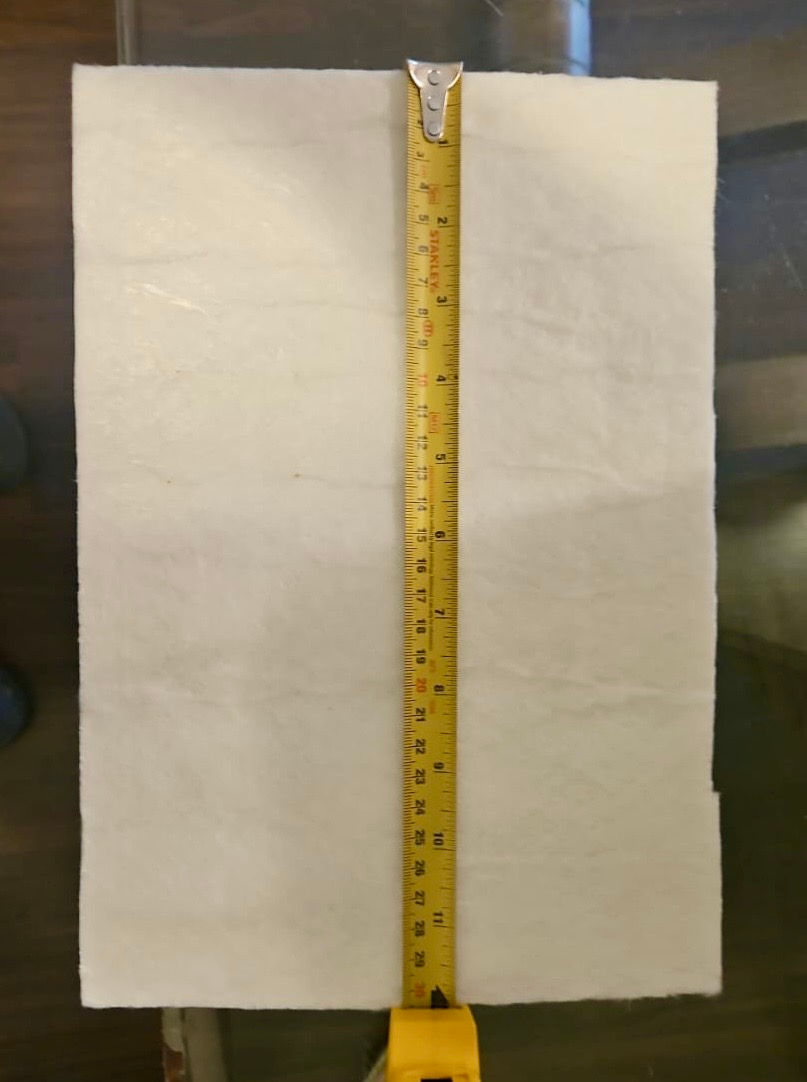
The result is a material that is up to 99.8% air by volume, yet structurally solid. Silica aerogel — the type used in industrial insulation blankets — was first developed in the 1930s and was used by NASA in spacecraft thermal shielding from the 1990s onward. Today it is manufactured commercially for industrial pipelines, building insulation, electric vehicle battery systems, and defence applications.
DARQ supplies silica aerogel insulation in blanket, roll, composite, and powder form for industrial and mobility applications across India.
Key Technical Properties: Thermal Conductivity, Temperature Range & More
Understanding aerogel's performance starts with three numbers that define how it behaves in real-world applications.
Thermal Conductivity of Aerogel vs Other Insulation Materials
When specifying insulation for industrial or EV applications, material selection comes down to measurable performance — not marketing claims. The table below compares aerogel blanket insulation against the three most common alternatives used in India across the key parameters that actually matter for procurement and engineering decisions.
Aerogel vs Mineral Wool vs Ceramic Fiber vs PU Foam — Side-by-Side Comparison
Property | Aerogel Blanket | Mineral Wool | Ceramic Fiber | PU Foam |
Thermal conductivity (W/m·K) | 0.013–0.018 | 0.033–0.045 | 0.10–0.25 | 0.022–0.028 |
Max operating temp | 650°C | 700°C | 1,260°C | 80°C |
Density (kg/m³) | 100–200 | 15–40 | 64–160 | 30–80 |
Fire resistance | Non-combustible | Non-combustible | Non-combustible | Flammable |
Typical thickness for equiv. R | 10mm | 50–75mm | 75mm+ | 25mm |
India price approx. | ₹1,750–₹3,870/m² | ₹200–₹600/m² | ₹800–₹2,200/m² | ₹400–₹1,200/m² |
The data above makes the core trade-off clear: aerogel costs 3–6x more per square metre than mineral wool, but delivers 2–3x better thermal resistance at 10–15% of the thickness. For retrofit projects where you cannot add 75mm of insulation, or for EV battery modules where every millimetre counts, aerogel stops being "expensive" and starts being the only viable option. For standard large-area building insulation where space is not constrained, mineral wool or XPS remains the practical choice.
Temperature Range and Fire Resistance
Silica aerogel insulation operates across a temperature range of approximately -200°C to +650°C depending on the reinforcement and facing configuration. This covers the vast majority of industrial process temperatures, including steam lines, LNG pipelines, and high-temperature equipment insulation.
Fire resistance is an intrinsic property of silica aerogel — it is non-combustible (A1 classification under European standards), does not melt, does not drip, and does not produce toxic smoke when exposed to flame. This makes it suitable for passive fire protection applications in oil and gas, power generation, and EV battery systems where polymer-based insulation materials fail both thermally and in terms of fire safety compliance.
DARQ's aluminium foil faced aerogel blanket rolls add an additional radiant heat reflection layer, further improving performance in high-radiation environments such as furnace surrounds and industrial ovens.
Aerogel Insulation Applications by Industry
Aerogel insulation is not a general-purpose replacement for all insulation materials. It is selected where technical constraints — temperature, space, weight, or fire risk — make conventional materials inadequate. Here is how it is used across the key sectors where DARQ supplies in India.
Oil & Gas Pipelines and Refineries
Pipeline insulation in refineries, LNG plants, and offshore platforms must perform across extreme temperature cycles, resist moisture ingress, and prevent corrosion under insulation (CUI) — one of the leading causes of pipeline failure in the oil and gas industry.
Aerogel blankets address all three. Their hydrophobic structure repels moisture, their thin profile reduces mechanical stress at pipe joints, and their thermal performance is maintained even after wet-dry cycling that degrades mineral wool over time. A 10mm aerogel blanket on a 150mm diameter pipe delivers equivalent performance to 50–75mm of conventional rockwool jacketing.
DARQ's aluminium foil faced aerogel blanket roll is specifically used in pipeline insulation applications where reflective jacketing is required.
EV Battery Thermal Management
Electric vehicle battery packs generate heat during charge and discharge cycles. If heat is not managed, it accelerates cell degradation and, in worst cases, triggers thermal runaway — uncontrolled exothermic reactions that can lead to fires.
Aerogel insulation is placed between battery cells or modules as a thin thermal barrier that slows heat propagation without adding significant mass or volume to the pack. DARQ's EV battery aerogel thermal insulation pads are engineered for this application, available in thicknesses from 0.2mm to 5mm with temperature resistance up to 650°C.
As India's EV market scales — with Tata, Mahindra, Ola Electric, and global OEMs all increasing local production — demand for compact, high-performance battery thermal management materials is growing rapidly.
Green Buildings and Construction
In construction, aerogel is used where wall, roof, or floor build-up thickness is constrained — typically in retrofits of existing buildings, premium residential projects, and commercial buildings targeting LEED or IGBC green certification.
A 10mm aerogel insulation layer in an external wall assembly can deliver the same thermal resistance as 50–75mm of conventional insulation, reducing wall thickness significantly. For architects designing high-end projects in urban India where every centimetre of floor area has value, this is a material decision with direct financial impact.
Aerogel insulation is also used in modular and prefabricated building systems, where the thin profile integrates cleanly into LGSF panel assemblies without requiring structural redesign.
Aerospace and Defence
Lightweight thermal shielding in aircraft, missiles, spacecraft, and military equipment requires materials that maintain performance under extreme thermal cycling, vibration, and mechanical stress — at the lowest possible weight.
Silica aerogel was developed for exactly these conditions. DARQ supplies aerogel insulation for defence and aerospace applications including ISRO, DRDO, and Ministry of Defence-adjacent procurement requirements, where standard industrial insulation products are not specification-compliant.
Cold Chain Logistics
Pharmaceutical cold chain logistics and temperature-controlled food transport require insulation materials that maintain internal temperature ranges with minimal wall thickness in boxes, containers, and refrigerated vehicles.
Aerogel insulation in cold box walls allows thinner panel construction with equivalent or better thermal retention compared to conventional polyurethane foam panels, directly increasing usable internal volume. DARQ supplies aerogel insulation for cold chain applications alongside its vacuum insulation panel range.
Aerogel Insulation Price in India — What Does It Actually Cost?
Aerogel insulation is priced higher than conventional materials, and understanding why — and whether the cost is justified for your application — is essential before specifying it.
For standard industrial aerogel blanket insulation, indicative pricing in India in 2026 is:
- 5mm aerogel blanket roll: from ₹1,750 per square metre
- 10mm aerogel blanket roll: from ₹2,850 per square metre
- Aluminium foil faced aerogel blanket: from ₹4,850 per square metre
- Aerogel insulation powder (DARQGel): from ₹6,100 per kg
For comparison, standard mineral wool insulation in India is priced at ₹200–₹600 per square metre and ceramic fibre at ₹800–₹2,000 per square metre.
The higher upfront cost of aerogel is typically offset by:
— Reduced installation labour (thinner, lighter material = faster installation)
— Lower heat loss in operation (direct energy cost savings)
— Longer service life in wet or corrosive environments vs mineral wool
— Avoided structural costs when thinner assemblies allow smaller equipment dimensions
For detailed pricing by thickness and configuration, see DARQ's aerogel insulation price guide for India.
Aerogel Blanket vs Aerogel Panel vs Aerogel Powder — Which Form Do You Need?
Aerogel is supplied in several physical formats, each suited to different applications.
Aerogel Blanket / Roll: The most widely used form. Flexible, available in 3mm to 10mm thickness, can be cut and wrapped around pipes, vessels, or irregular surfaces. Available plain or with aluminium foil or fabric facing. This is the correct choice for pipeline insulation, industrial equipment, EV battery modules, and most construction applications.
Aerogel Panel / Board: Rigid format for flat surface insulation such as walls, floors, or furnace linings. Less flexible than blanket but provides a dimensionally stable insulation layer.
Aerogel Powder / Granules (DARQGel): Used as a fill or additive in coatings, renders, and composite manufacturing. Suitable for R&D, specialty coating formulations, and applications where a liquid-applied or mixed-in insulation is required.
For most industrial procurement requirements in India, the aerogel blanket roll is the correct starting point. DARQ supplies 5mm and 10mm blanket rolls, aluminium foil composite rolls, and EV-specific aerogel pads from stock in India with PAN-India delivery.

Is Aerogel Worth the Higher Upfront Cost? ROI Analysis
The honest answer: it depends on the application, and the calculation is straightforward.
Where aerogel is almost always worth it:
— Retrofit insulation where you cannot add more than 15–20mm of insulation thickness
— High-temperature pipelines where mineral wool would require 75mm+ and is susceptible to CUI
— EV battery and electronics applications where weight and space are hard constraints
— Cold chain applications where thinner walls increase payload capacity
— Any application where conventional insulation has already failed and been replaced multiple times
Where aerogel may not be the right choice:
— Large-area building insulation with no space constraints (mineral wool or XPS is more economical)
— Low-temperature applications under 100°C where PU foam or XPS performs adequately at lower cost
— Prototype or very small quantities where per-unit cost is not offset by performance benefit
A simple ROI calculation for a pipeline insulation project: if 10mm aerogel blanket replaces 75mm rockwool, the installation labour saving alone (3–4x faster installation on complex pipe geometry) can recover the material cost premium within the first project. Add annual energy savings from reduced heat loss and the payback period in industrial applications is typically 2–4 years.
How to Buy Aerogel Insulation in India — DARQ's Process
DARQ supplies aerogel insulation blankets, rolls, EV thermal pads, and powder across India from stock held in Gurugram, Ahmedabad, and Jaipur, with export capability to GCC, UAE, and Southeast Asia.
To get a quote or technical recommendation for your project:
1. Share your application (pipeline insulation, EV battery, construction, etc.)
2. Specify required thickness or thermal performance target
3. Share approximate quantity in square metres or rolls
4. Provide delivery location for freight calculation
Our team responds with a project-specific quote within 24–48 hours. PAN-India delivery in 7–14 working days.
Frequently Asked Questions — Aerogel Insulation India
Q: What is the thermal conductivity of aerogel insulation?
A: Aerogel insulation has a thermal conductivity of 0.013 to 0.018 W/m·K, making it 2–3x more thermally efficient than mineral wool (0.033–0.045 W/m·K) and significantly better than polyurethane foam at equivalent thickness. This is the lowest thermal conductivity of any commercially available flexible insulation material.
Q: What is the price of aerogel insulation in India?
A: Aerogel insulation blanket rolls in India are priced from ₹1,750 per square metre for 5mm thickness, going up to ₹4,850/m² for aluminium foil faced 10mm composite systems. Final pricing depends on thickness, facing configuration, and order quantity. DARQ provides project-specific quotes within 24 hours.
Q: What is aerogel insulation used for in India?
A: In India, aerogel insulation is primarily used in oil and gas pipeline insulation, EV battery thermal management, industrial equipment in refineries and power plants, cold chain logistics, green building construction, and aerospace and defence applications. It is selected where space constraints, extreme temperatures, or fire risk make conventional insulation materials inadequate.
Q: Is aerogel insulation fire resistant?
A: Yes. Silica aerogel insulation is inherently non-combustible — it does not burn, melt, or produce toxic smoke. It is classified as A1 non-combustible under European fire standards. This makes it a preferred material for passive fire protection in oil and gas facilities, EV battery systems, and high-temperature industrial environments.
Q: How does aerogel insulation compare to mineral wool?
A: Aerogel insulation provides equivalent thermal resistance at 10–15% of the thickness of mineral wool. A 10mm aerogel blanket replaces approximately 50–75mm of mineral wool in most applications. Aerogel is also hydrophobic and resistant to corrosion under insulation, whereas mineral wool absorbs moisture over time, which reduces its thermal performance and accelerates pipe corrosion.
Q: Who manufactures and supplies aerogel insulation in India?
A: DARQ Industries is one of the leading aerogel insulation manufacturers and suppliers in India, supplying silica aerogel blanket rolls, aluminium foil faced composite systems, EV battery thermal insulation pads, and aerogel powder across industrial, construction, and mobility sectors. DARQ operates from Gurugram, Ahmedabad, and Jaipur with PAN-India delivery and export capability.
Q: What is the minimum order quantity for aerogel insulation from DARQ?
A: The minimum order quantity is 2 rolls for standard aerogel blanket configurations. For EV battery pads and powder, smaller quantities are available. For project-specific or bulk industrial supply, contact DARQ for volume pricing.
References
- Aerogel Market Size & Forecast 2026–2033 — Coherent Market Insights
- Global Aerogel Insulation Market — GMInsights (2025)
- NASA Aerogel Applications — NASA Science
- Insulation Materials Guide — U.S. Department of Energy
Aerogel insulation is a technically and commercially mature material now
accessible in India for industrial, construction, EV, and defence applications.
DARQ supplies project-ready aerogel insulation from stock across India with
technical support for specification, sizing, and installation guidance.
For enquiries, datasheets, or project quotes — contact the DARQ technical team.


Comments